The Habsburg dynasty’s relationship with Ischl (since 1906 Bad Ischl) goes back over 700 years and has become a matter of the heart over time. As a 15-year-old crown prince, Franz Joseph wrote to his mother: “Oh, how I long for dear, dear Ischl.” That was in 1845, and this affection remained unchanged until the end of his long life. In return, Ischl has remained loyal to him to this day. What remains of Vienna as the “Imperial City” may be of museum value, but Ischl still celebrates “The Emperor’s Birthday” on August 18th with all the ceremony and great joy, and knows that his Imperial Villa is still full of Habsburg family life.
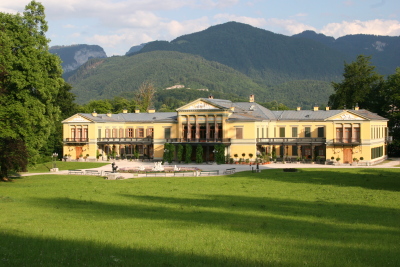
Of course, this Imperial Villa is a miniature version compared to the grandiose splendor of the Viennese residences (Hofburg, Schönbrunn). But that is in the nature of things: it was intended to be nothing more than a refuge where the imperial family could be alone, unhindered by the rigid protocol of the capital. It should be noted that its appeal therefore lies not in spectacular interiors or an entertainment program for tourists, but in its relationship to history. Here the unchanged ambience of a bygone era lives on, when the imperial court still provided the framework for that important Austrian culture and intellectuality that reached its full bloom around 1900.
The house and park are inseparably linked to the memory of Empress Elisabeth, with Sisi, as she was called in the family. She was one of the greatest beauties of the 19th century and is still considered a fascinating personality today. It was here that her inconsolable husband sought peace after she was assassinated in 1898. Here he met with statesmen for diplomatic negotiations at the highest level, and here in 1914 he signed the declaration of war on Serbia, which developed into the First World War.
Emperor Franz Joseph I allowed visitors to visit the Imperial Villa, including his private apartments, when he was not in residence. His descendants have maintained this tradition, with the house and park now being open to the public during the summer months. They offer visitors the same picture that was once seen by the Emperor and his family.